N+1 vs. Spring Data vs. Hibernate
Aneb Eager je past
Created by Petr "Glubo" Sykora
Čo vy si predstavujete pod takým N+1?
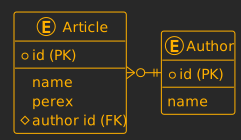
            SELECT * FROM article;
            SELECT * FROM author WHERE id = 1;
            SELECT * FROM author WHERE id = 2;
            -- ...
Možnosti řešení
Fetch join
            SELECT article.*, author.*
            FROM article
            LEFT JOIN author ON article.author_id = article.id;
- Jeden dotaz ✅
- Násobení řídkých dat N*M ❌
Možnosti řešení
Constant number queries
            SELECT * FROM article;
            SELECT * FROM author WHERE id IN (...);
- Konstantní počet dotazů ✅
- Žádné násobení řídkých dat N*M ✅
- Ale víc jak jeden dotaz ❌
Spring Data a Hibernate
Fakt hodně vrstev
- Spring Data
- Spring Data JPA
- JPA/Jakarta.persistance
- Hibernate
- JDBC, pgbouncer, postgresql
Co nezměříš, nevíš!
Možnosti meření
Hibernate log queries
        application.yml:
        ...

        spring:
            jpa:
                show-sql: true
                properties:
                    hibernate:
                    format_sql: true
Možnosti meření
Hibernate log queries
        Hibernate:
        select
            aem1_0.id,
            aem1_0.author_id,
            aem1_0.name,
            aem1_0.perex
        from
            article aem1_0
Možnosti meření
Hibernate statistics
            application.yml:
            ...

            spring:
                jpa:
                    properties:
                        hibernate:
                            generate_statistics: true
Možnosti meření
Hibernate statistics
            10:10:06.322 [pool-1-thread-1 @coroutine#7] INFO  o.h.e.i.StatisticalLoggingSessionEventListener - Session Metrics {
                5950 nanoseconds spent acquiring 1 JDBC connections;
                7000 nanoseconds spent releasing 1 JDBC connections;
                361002 nanoseconds spent preparing 23 JDBC statements;
                4345252 nanoseconds spent executing 23 JDBC statements;
                0 nanoseconds spent executing 0 JDBC batches;
                0 nanoseconds spent performing 0 L2C puts;
                0 nanoseconds spent performing 0 L2C hits;
                0 nanoseconds spent performing 0 L2C misses;
                1954341 nanoseconds spent executing 1 flushes (flushing a total of 224 entities and 0 collections);
                9386541973450 nanoseconds spent executing 1 pre-partial-flushes;
                1770 nanoseconds spent executing 1 partial-flushes (flushing a total of 0 entities and 0 collections)
            }
Možnosti měření
TestContainers a pg_stat_statements
- "Trochu" komplikovanější setup
        10:10:06.324 [pool-1-thread-1 @coroutine#7] INFO  PgStatsService - Query statistics:
        calls: 22 totalExec: 0s totalPlan: 0s query: 'select aem1_0.id,aem1_0.name from author aem1_0 where aem1_0.id=$1'
        calls: 1 totalExec: 0s totalPlan: 0s query: 'SELECT 1 FROM pg_stat_statements_reset()'
        calls: 1 totalExec: 0s totalPlan: 0s query: 'select aem1_0.id,aem1_0.author_id,aem1_0.name,aem1_0.perex from article aem1_0'
        calls: 2 totalExec: 0s totalPlan: 0s query: 'BEGIN'
Možnosti detekce
fail on Pagination over Collection Fetch
- Detekuje a vyhodí runtime vyjímku při některých N+1 scénářích
            spring:
              jpa:
                properties:
                  hibernate:
                    query:
                      fail_on_pagination_over_collection_fetch: true
Many To One
- Tak tam hod Eager a bude...
Many To One - Nope ❌
FetchType.EAGER
            ...
            @ManyToOne(fetch = FetchType.EAGER)
            var author: AuthorBatchSizeMTO,
            ...
Many To One - Nope ❌
@BatchSize
            ...
            @Table(name = "article")
            @Entity
            @BatchSize(size = 100)
            class Article(
                @ManyToOne()
                @BatchSize(size = 100)
                var author: AuthorBatchSizeMTO,
            ...
Many To One - Nope ❌
FetchMode.JOIN
            ...
            @Fetch(FetchMode.JOIN)
            var author: Author,
            ...
Many To One - Win ✅
adhoc @EntityGraph
            ...
            @Repository
            interface Repo : CrudRepository<Article, Long> {

                @EntityGraph(attributePaths = [ "author" ])
                abstract override fun findAll(): MutableList<Article>
            ...
Many To One - Win ✅
Named @EntityGraph
            @Entity
            @NamedEntityGraph(
                name = "myDescriptiveName",
                attributeNodes = [
                    NamedAttributeNode("author"),
                ],
            )
            class Article(
            ...
            @Repository
            interface Repo : CrudRepository<Article, Long> {

                @EntityGraph(value = "myDescriptiveName")
                abstract override fun findAll(): MutableList<Article>
            ...
Many To One - Win ✅
HQL/JPQL join fetch
            ...
            @Repository
            interface Repo : CrudRepository<Article, Long> {
                @Query(
                    "select a" +
                        " from Article a" +
                        " join fetch a.author",
                )
                fun joinFetch(): MutableList<Article>

            ...
Many To One - Win ✅
Criteria explicit fetch
            ...
            fun findAllFetch(): List {
                val builder = em.criteriaBuilder
                val query = builder.createQuery(ArticleDefaultWinMTO::class.java)
                val entity = query.from(ArticleDefaultWinMTO::class.java)
                entity.fetch("author")

                return em.createQuery(query).resultList
            }
            ...
One to Many, Many to Many
- Triky, které zabírají u Many to One fugnují také
- Navíc funguje @BatchSize na atributu
- U kolekcí Set vs. List
Spring Data -- poznamky
- Magické metody jou criteria query na úrovni JPA a hloubš
- Ale mají @EntityGraph
Workflow
- Z monitoringu zjistím bottleneck
- Bottleneck si reprodukuju v testu/kontrolovaném prostředí
- Řeším N+1
- Po nasazení zkontroluji v monitoringu, že jsem bottlenecku pomohl
Závěr
- Hibernate preferuje fetch join
- Eager je past
- Většina článků/odpovědí/chatgpt nezahrnuje vliv všech vrstev
- Moc vrstev, je potřeba kontrolovat výsledky
- Pozor na data classes jako entity
Kam dál
- Hibernate User Guide https://docs.jboss.org/hibernate/orm/7.2/userguide/html_single/Hibernate_User_Guide.html
- Můj demonstrační projekt https://gitlab.com/g3476/nplusone